
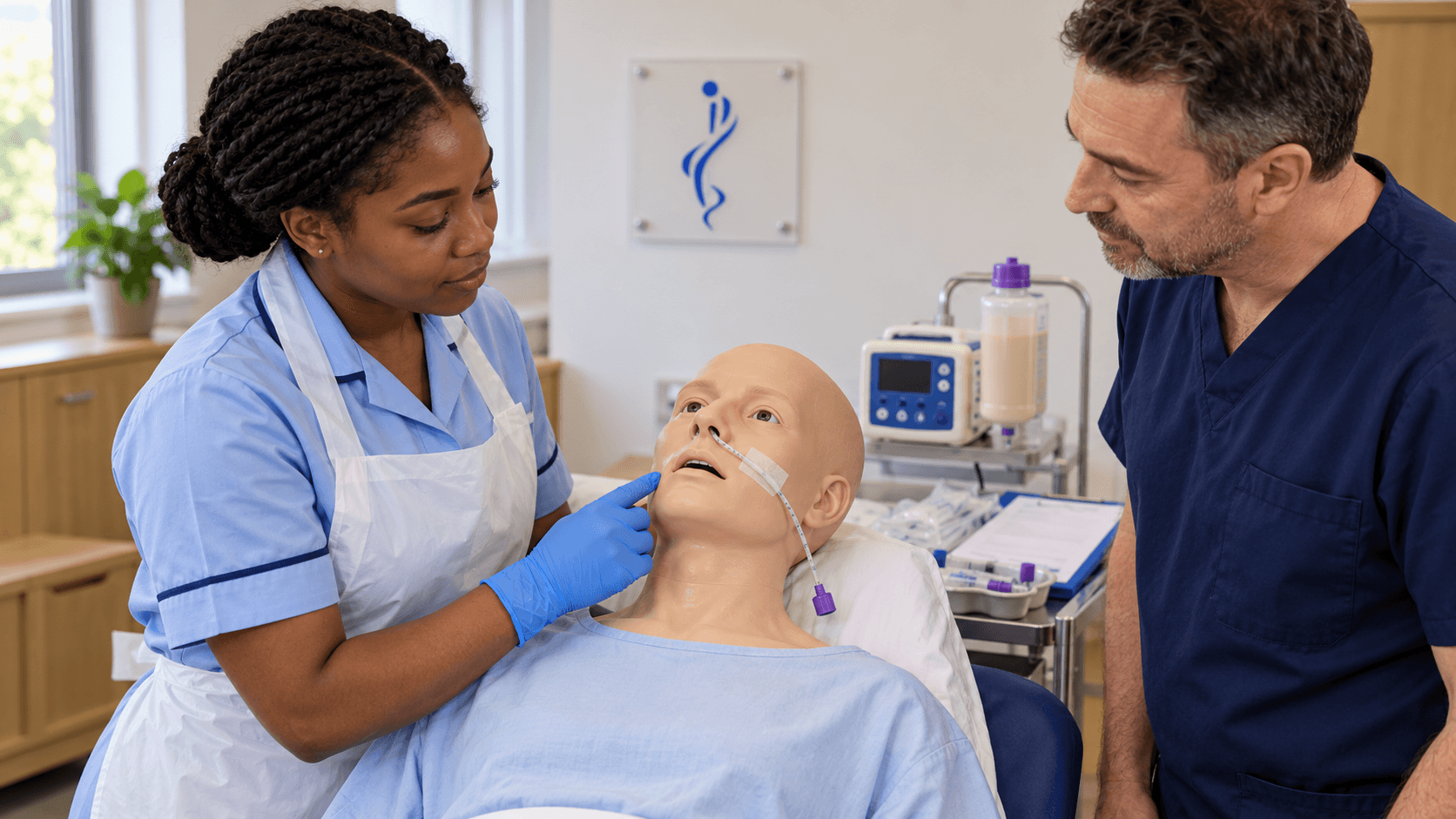
 Face To Face
NG / NJ Feeding, Tube Care and Management
This practical face-to-face course explores the care of adults with nasogastric (NG) and nasojejunal (NJ) feeding tubes…
Half dayFrom£49.99
Our one-day Emergency First Aid at Work course is designed for people who may need to provide first aid in a workplace emergency. The course gives learners the essential knowledge and practical skills to respond safely and confidently to common first-aid situations until professional help arrives.
Learners will cover the role of the first aider, assessing an incident, CPR and AED use, the recovery position, choking, seizures, bleeding, shock, burns and minor injuries. The course includes practical training and assessment throughout the day.
This course is suitable for low-risk workplaces or for staff who have been nominated to act as an emergency first aider. Successful learners will receive an Emergency First Aid at Work certificate, valid for three years.
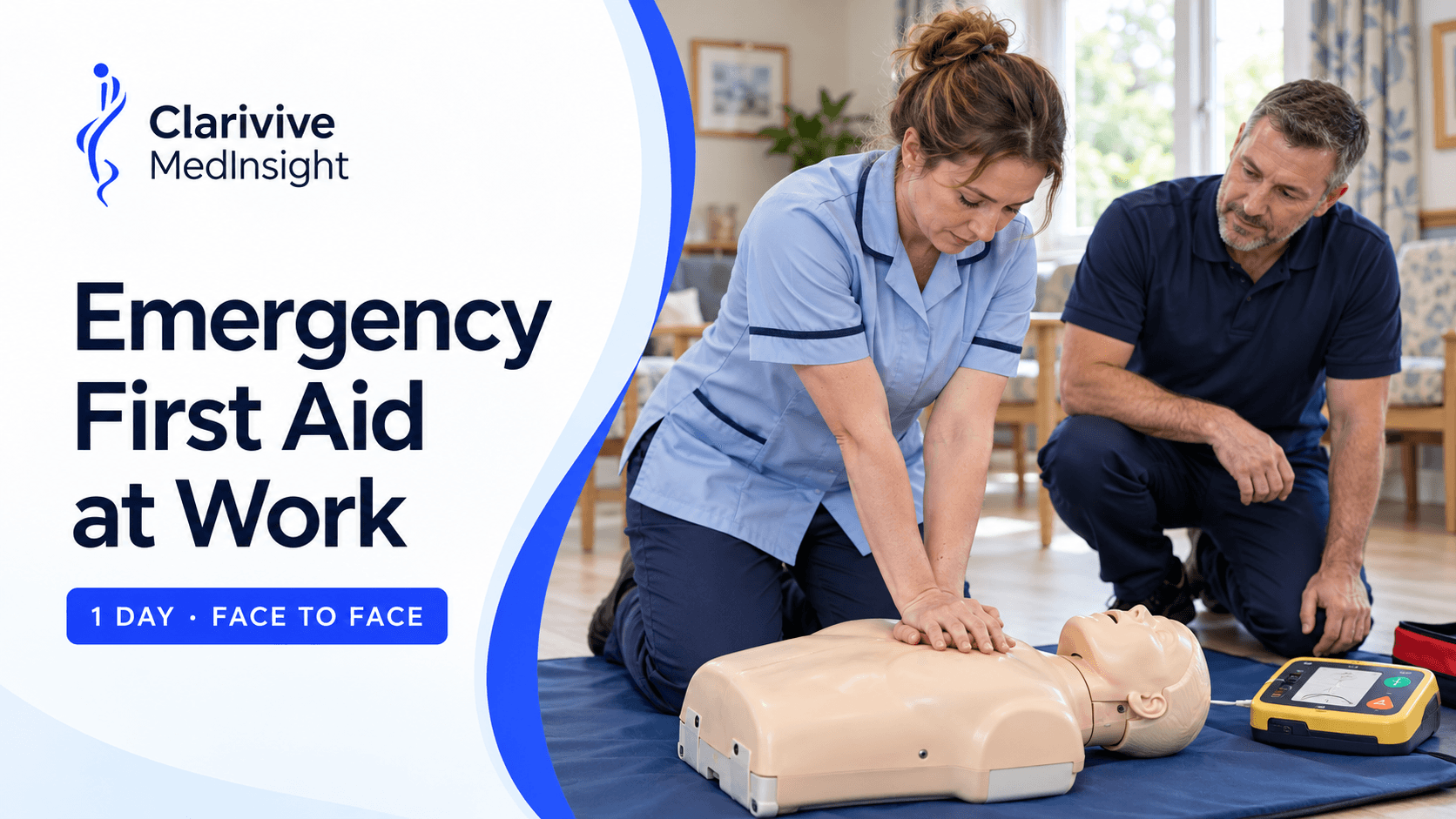
Emergency First Aid at Work (EFAW) — One-Day Course
Practical, face-to-face first-aid training for adult workplace emergencies
This one-day course gives learners the essential knowledge and practical skills to respond to workplace first-aid emergencies. It focuses on assessing the situation, taking immediate action and supporting an injured or unwell person until professional help takes over.
Delivered by Clarivive MedInsight, the course combines clear explanations, trainer demonstrations, supervised practice and realistic workplace scenarios.
Aim
To help learners recognise emergencies and provide appropriate first aid to preserve life, prevent deterioration and promote recovery, while working within their training and responsibilities.
Who is this course for?
This course is suitable for:
Employers should select training according to their workplace’s first-aid needs, rather than job title or sector alone.
Why it matters
The first few minutes of an emergency can be critical. Recognising a serious problem, obtaining help promptly and providing appropriate first aid can reduce harm while further assistance is arranged.
Practical training gives learners opportunities to rehearse their response, correct mistakes and understand when additional help is needed.
Course content and learning objectives
By the end of the course, successful learners will be able to:
| TopicLearning objective | |
| First-aider responsibilities | Explain their role, limitations and the importance of consent, dignity and safe practice. |
| Incident assessment | Identify hazards, assess the casualty and prioritise immediate action. |
| Emergency assistance | Call 999, communicate essential information and follow call-handler instructions. |
| Adult basic life support | Recognise unresponsiveness and abnormal breathing, and demonstrate adult CPR and safe AED use. |
| Recovery position | Recognise when the recovery position is appropriate, demonstrate it safely and continue monitoring breathing. |
| Choking | Recognise choking and demonstrate the appropriate adult response using training equipment. |
| Seizures | Explain how to protect and support someone during and after a seizure. |
| Wounds and bleeding | Demonstrate bleeding control and apply appropriate dressings. |
| Shock | Recognise signs of circulatory shock and provide appropriate immediate assistance. |
| Minor injuries | Provide first aid for small cuts, grazes, bruises, minor burns, scalds and small splinters. |
| Infection prevention | Apply hygiene precautions and use available protective equipment appropriately. |
| Recording and reporting | Record first-aid actions accurately and follow workplace reporting procedures. |
Course scope
This course covers emergency first aid for adults. It does not replace paediatric first aid, advanced clinical training or specialist training for particular workplace hazards.
Where an employer’s first-aid needs assessment identifies a need for broader coverage, the three-day First Aid at Work course or additional specialist training may be more appropriate.
Duration and delivery
The course takes place face to face over one day, with at least six hours of training and assessment, excluding breaks.
Activities include trainer demonstrations, individual and paired practice, scenario discussions and feedback. Learners use CPR manikins, AED trainers, dressings and other suitable training equipment.
Assessment
Assessment includes knowledge-based questions and individual observation of practical skills.
Learners must complete the required training and demonstrate the required knowledge and practical skills. Attendance alone does not guarantee a pass or competence certificate.
Learners who need further development receive feedback and information about the next steps for reassessment.
Certification and refresher training
Successful learners receive a Clarivive MedInsight Emergency First Aid at Work certificate, valid for three years, subject to meeting all assessment requirements.
Annual refresher training is strongly recommended by HSE to help maintain skills and confidence. It does not replace the EFAW requalification course needed before the certificate expires.
Preparing for your session
Complete your pre-training declaration and wear comfortable clothing suitable for practical activities, including kneeling and working at floor level.
Tell us beforehand about any accessibility, learning, communication or health-related support needs. A private discussion can be arranged so reasonable adjustments can be considered while maintaining the required assessment standards.
Continue learning
Discover more face to face training selected from our course catalogue.
Face To FaceThis practical face-to-face course explores the care of adults with nasogastric (NG) and nasojejunal (NJ) feeding tubes…
We strive for excellent training experiences and continuously improve for learners and organizations.



Because you deserve a training platform that delivers.


