
 Face To Face
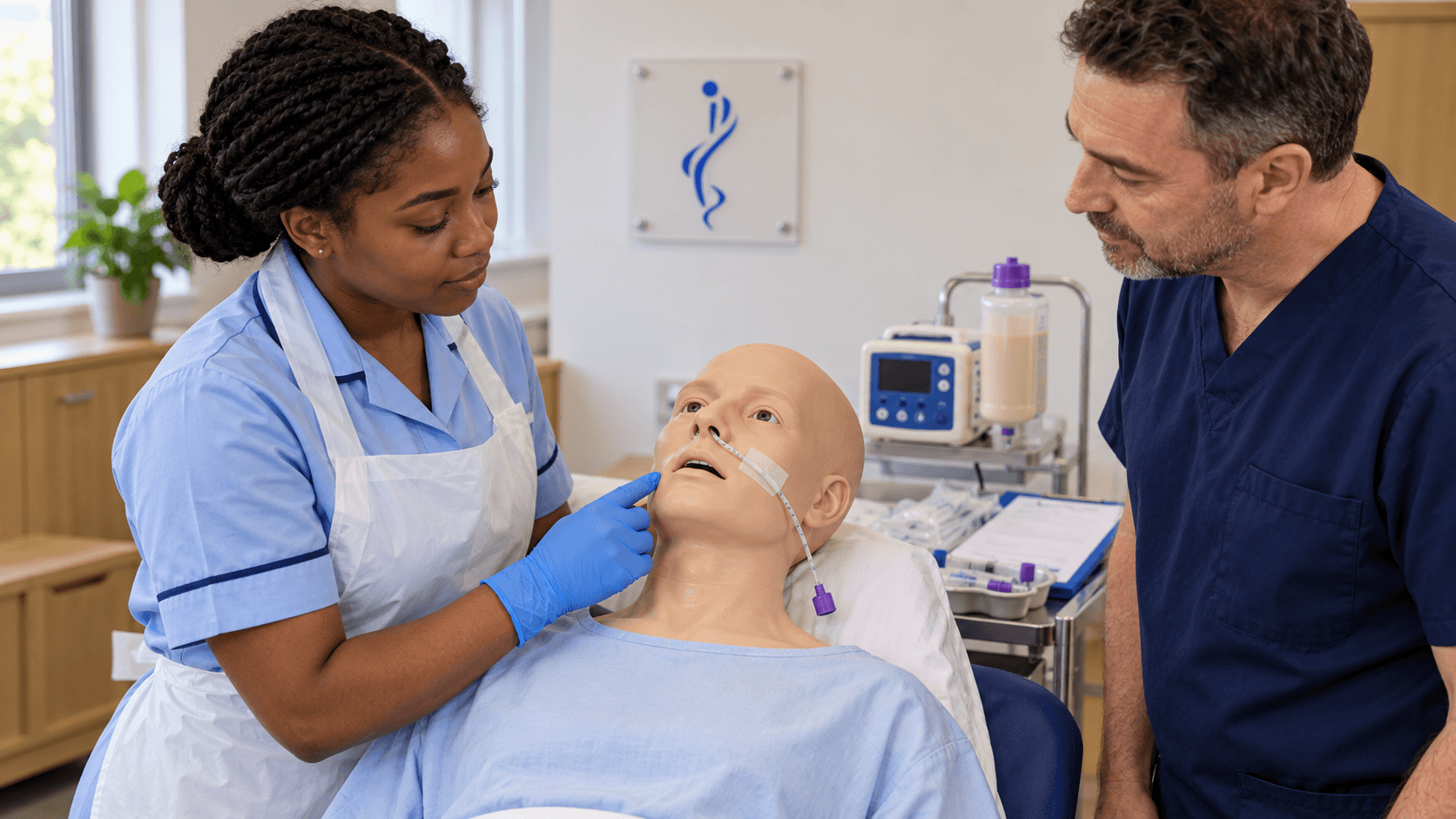
NG / NJ Feeding, Tube Care and Management
This practical face-to-face course explores the care of adults with nasogastric (NG) and nasojejunal (NJ) feeding tubes…
Half dayFrom£49.99
Medical emergencies can happen at any time and in any workplace. The ability to recognise an emergency, provide immediate first aid and respond confidently before professional help arrives can help protect life, reduce the severity of injuries and improve outcomes.
This comprehensive First Aid at Work (RQF Level 3) course provides learners with the knowledge, practical skills and confidence required to deal with a wide range of workplace medical emergencies. Through a combination of trainer-led demonstrations, realistic practical scenarios, hands-on skills practice and formal assessment, learners will develop the competence needed to act safely and effectively when responding to accidents and sudden illness.
Training follows current UK legislation, Health and Safety Executive (HSE) expectations, Resuscitation Council UK guidance and recognised first aid best practice. Successful learners will gain a nationally recognised qualification that helps employers meet their legal responsibilities for workplace first aid provision.
Whether responding to an unconscious casualty, severe bleeding, burns, fractures, choking, cardiac arrest or other medical emergencies, learners will develop practical skills that can be applied confidently in real workplace situations.
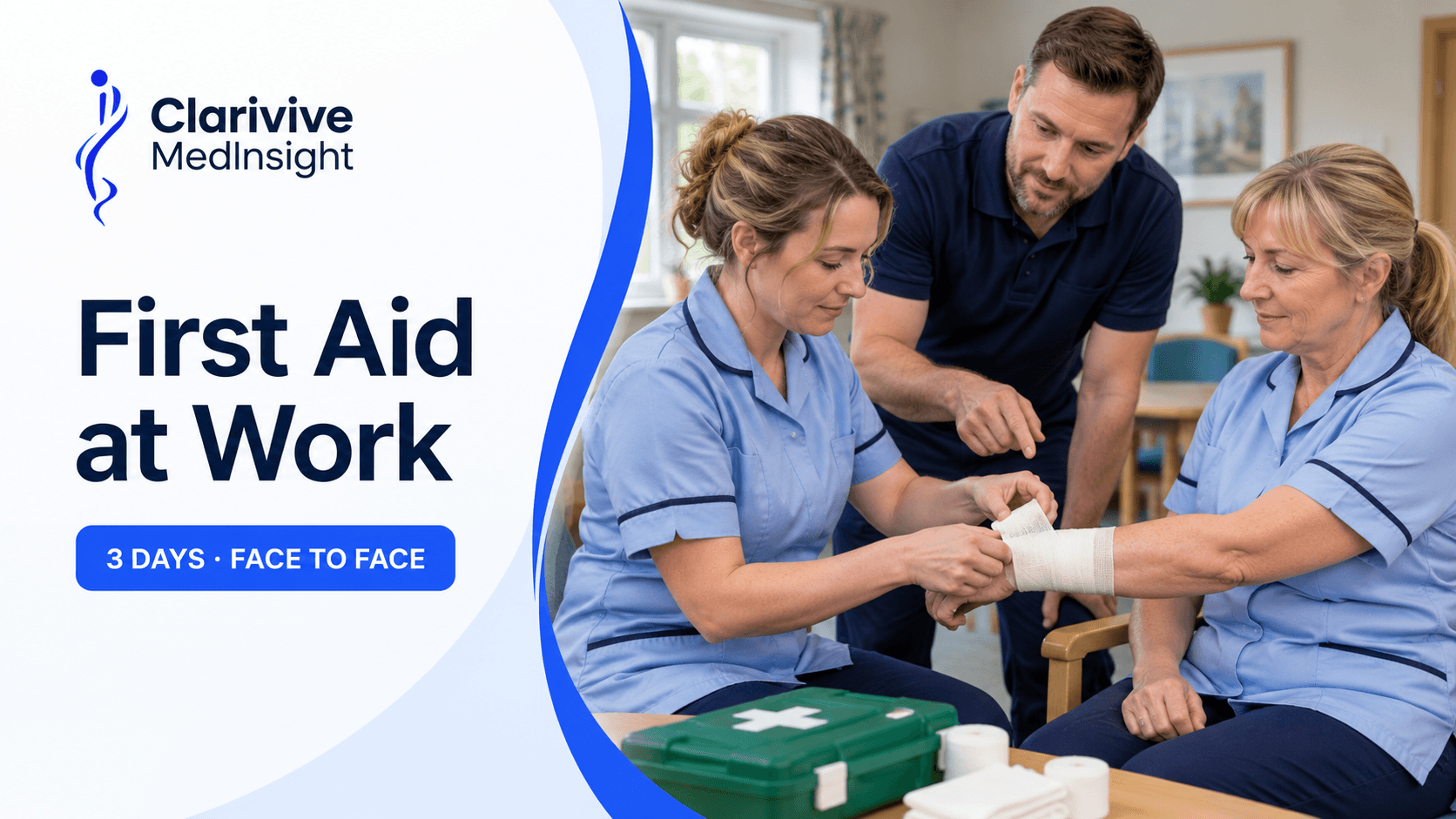
First Aid at Work (FAW) — Three-Day Course
Practical, face-to-face training for adult workplace first aid
This three-day First Aid at Work course develops the knowledge and practical skills needed to assess casualties, respond to workplace emergencies and provide appropriate first aid until professional help takes over.
Delivered by Clarivive MedInsight, the course combines trainer-led teaching, demonstrations, supervised practice and realistic scenarios. It covers both immediate life-saving actions and a wider range of workplace injuries and medical emergencies.
Course aim
To prepare learners to act safely and promptly as workplace first aiders, providing care that helps preserve life, prevent deterioration and promote recovery while recognising the limits of their role.
Who is this course for?
This course is suitable for people nominated as workplace first aiders, particularly where an employer’s first-aid needs assessment identifies a need for the full FAW syllabus.
Learners may include:
No previous first-aid experience is required.
Why choose the three-day course?
The full First Aid at Work course provides broader coverage than the one-day Emergency First Aid at Work course. Alongside CPR, AED use and immediate emergency care, learners explore injuries and illnesses that require additional recognition and first-aid skills.
Supervised practice gives learners time to rehearse techniques, receive feedback and apply their learning to realistic situations.
Course scope
The course focuses on first aid for adults in the workplace. Employers should select training that reflects their workplace hazards, workforce and first-aid needs assessment.
School, nursery and childcare staff who also need to provide first aid to children or infants will require appropriate paediatric training. Specialist workplace hazards may require additional training beyond the FAW syllabus.
What you will learn
| AreaKnowledge and skills covered | |
| First-aider responsibilities | Role boundaries, consent, dignity, infection prevention and appropriate use of first-aid equipment. |
| Emergency assessment | Scene safety, a structured primary survey, recognising immediate threats and prioritising action. |
| Calling for help | Contacting emergency services, following instructions and providing a clear handover. |
| Adult basic life support | Recognising cardiac arrest, performing CPR and using an AED safely. |
| Reduced responsiveness | Caring for an unresponsive casualty, recognising when the recovery position is appropriate and monitoring breathing. |
| Choking | Recognising airway obstruction and providing appropriate adult choking assistance. |
| Wounds, bleeding and shock | Controlling external bleeding, applying dressings and recognising circulatory shock. |
| Burns and minor injuries | First aid for burns, scalds, cuts, grazes, bruises and small splinters. |
| Bone, joint and muscle injuries | Recognising suspected fractures, dislocations, sprains and strains, and supporting the casualty safely. |
| Head, spinal, chest and eye injuries | Recognising concerning features, providing appropriate immediate care and obtaining further help. |
| Medical emergencies | Recognising and responding to heart attack, stroke, seizures, asthma and diabetic emergencies. |
| Anaphylaxis and poisoning | Recognising serious reactions or suspected poisoning and providing first aid within the learner’s training. |
| Recording and reporting | Documenting observations and actions accurately and following workplace reporting arrangements. |
| Practical scenarios | Applying first-aid skills, communicating with others and reassessing the casualty as circumstances change. |
Duration and delivery
Training takes place face to face over three days, with at least 18 hours of training and assessment, excluding breaks.
Sessions include demonstrations, individual and paired practice, discussions and scenario-based activities using CPR manikins, AED trainers and suitable first-aid training equipment.
Assessment
Learners complete knowledge-based assessments and individual practical assessments. Each learner must demonstrate the required skills and understanding.
Successful completion requires attendance throughout the required training and achievement of all assessment criteria. Attendance alone does not guarantee a pass or competence certificate.
Learners needing further development receive feedback and information about the next steps for reassessment.
Certification and refresher training
Successful learners receive a Clarivive MedInsight First Aid at Work certificate, valid for three years.
HSE strongly recommends annual refresher training to help first aiders maintain their skills. An appropriate requalification course must be completed before the certificate expires to maintain continuous certification.
Preparing for your course
Complete your pre-training declaration and wear comfortable clothing suitable for practical activities, including kneeling and working at floor level.
Tell us beforehand about any accessibility, learning, communication or health-related support needs. We can discuss reasonable adjustments while maintaining the required assessment standards.
Continue learning
Discover more face to face training selected from our course catalogue.
Face To FaceThis practical face-to-face course explores the care of adults with nasogastric (NG) and nasojejunal (NJ) feeding tubes…
We strive for excellent training experiences and continuously improve for learners and organizations.



Because you deserve a training platform that delivers.


